AI Researcher · Electrical Engineer · Control Systems Specialist
Deep Learning · Reinforcement Learning · Computer Vision · IoT
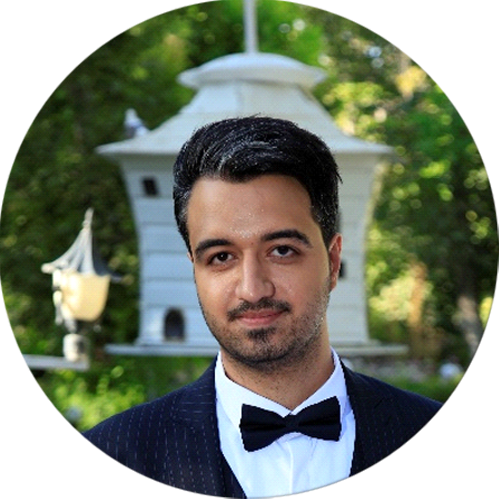
Hello! I'm Pouria Maleki (پوریا ملکی), an Electrical Engineer specializing in Control Systems from Hamedan, Iran. My work bridges Artificial Intelligence, Deep Reinforcement Learning, and real-world engineering challenges — from smart urban traffic to life-saving medical devices.
Holding an M.S. from Bu Ali Sina University (GPA 3.91/4, Ranked 1st in my cohort), I currently lead development of a gastric and colon cancer detection device at a knowledge-based company — a system that achieved 98% diagnostic accuracy and earned me the Top Technologist Award in Hamedan Province for two consecutive years.
I also actively teach electronics and embedded systems at the Ministry of Education, translating complex engineering concepts into hands-on learning for the next generation.
Urban population growth has intensified traffic challenges, necessitating effective control and management. This paper presents a comprehensive vehicle detection benchmark with 29,759 labeled images across 7 classes including ambulances and fire trucks. YOLOv7 achieves 85% precision and 85% mAP@0.5, with 64% mAP@0.5:0.9. The dataset uniquely emphasizes emergency vehicle movement facilitation, providing a critical resource for transportation and traffic management researchers.
A 3,000-image dataset of Iranian vehicles downloaded from Divar and Bama sites, manually labeled across 3 classes (car, truck, bus) with 5,765 bounding boxes. YOLOv8s trained on this dataset achieves 91.7% precision and 92.6% mAP@0.5 — a 10% mAP improvement over COCO-trained YOLOv8s at 50% threshold and approximately 22% improvement in the 50%–95% range. The dataset is publicly available.
This study compares LSTM networks, Random Forest, and Support Vector Machine algorithms for flood hazard risk prediction. Results show that RF and LSTM are the most accurate methods, highlighting their potential in enhancing flood hazard risk analysis. The findings offer valuable insights for risk mitigation strategies and infrastructure planning, contributing to more resilient disaster management frameworks.
An approach to manage energy demand within a cluster of air conditioning units using a centralized control system. Energy supply combines grid power with wind turbine renewables. A fuzzy logic controller achieves an optimal balance considering user comfort and energy costs. An adaptive nonlinear control system synchronises AC on-off cycles with fuzzy controller recommendations. Simulation results demonstrate adaptability to varying pricing schemes and responsiveness to price signals, advancing smart grid and sustainable energy management applications.
I aim to contribute as a researcher and teaching assistant at a leading academic institution, engaging in advanced AI-driven research and interdisciplinary collaborations that connect intelligent control systems with real-world humanitarian and engineering challenges.
Whether you're interested in research collaboration, PhD opportunities, or discussing AI and control systems — I'd love to hear from you.