An Intelligent Traffic Light Control System Using Deep Neural Networks
My 2021 M.S. thesis used Reinforcement Learning with Deep Q-Learning, SUMO simulation and YOLO-based traffic estimation for adaptive traffic-signal control.
Research visuals & results
2 figures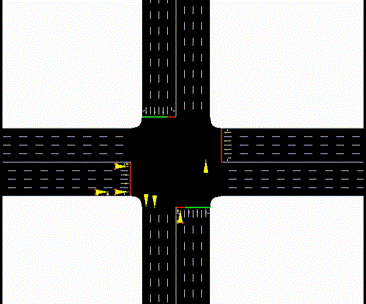
Traditional traffic lights usually operate with fixed timing plans or manually tuned rules. My M.S. thesis explored a more adaptive idea: treat the intersection as a reinforcement-learning environment and let an intelligent agent learn which signal action reduces congestion.
The learning loop
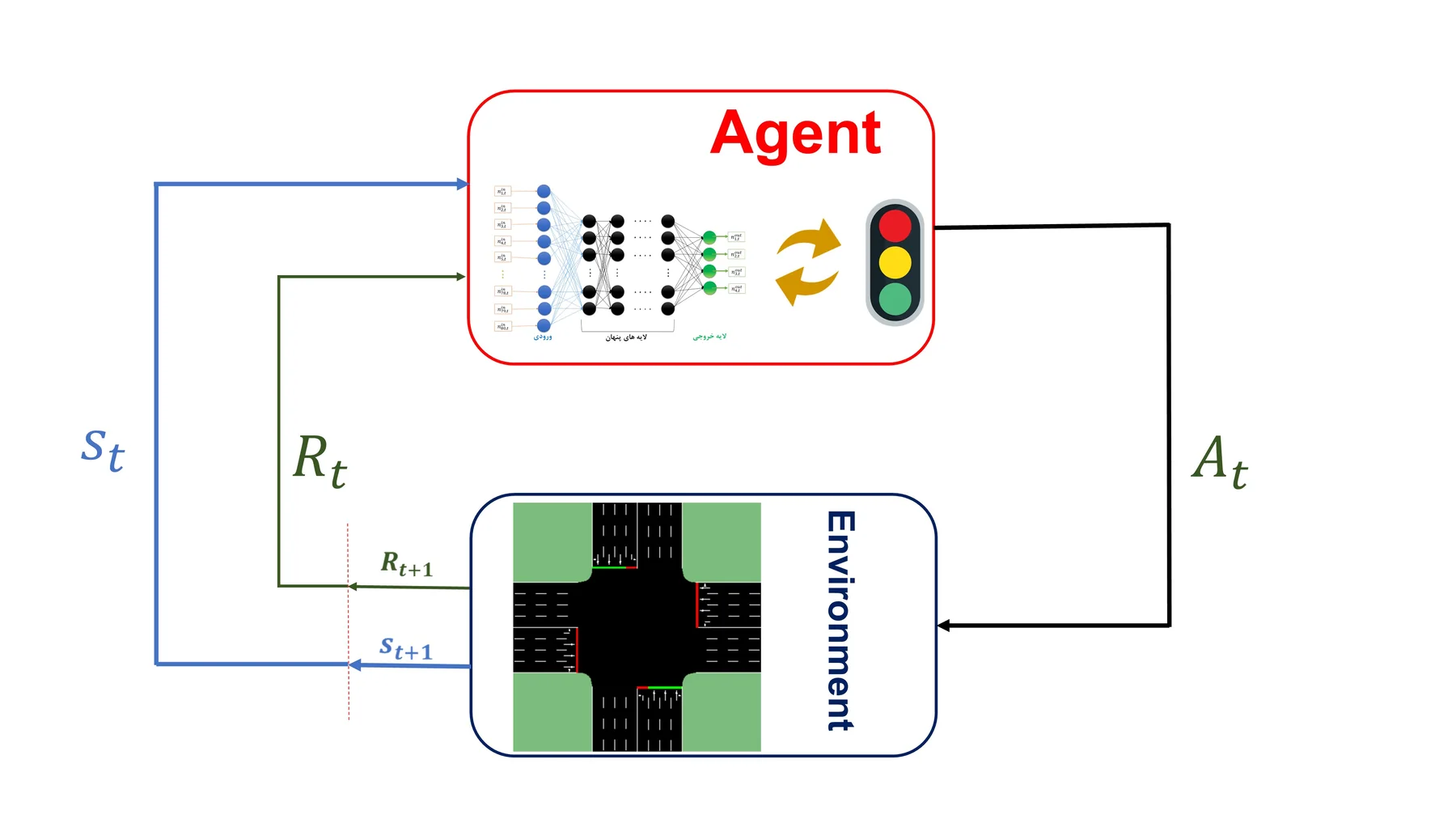
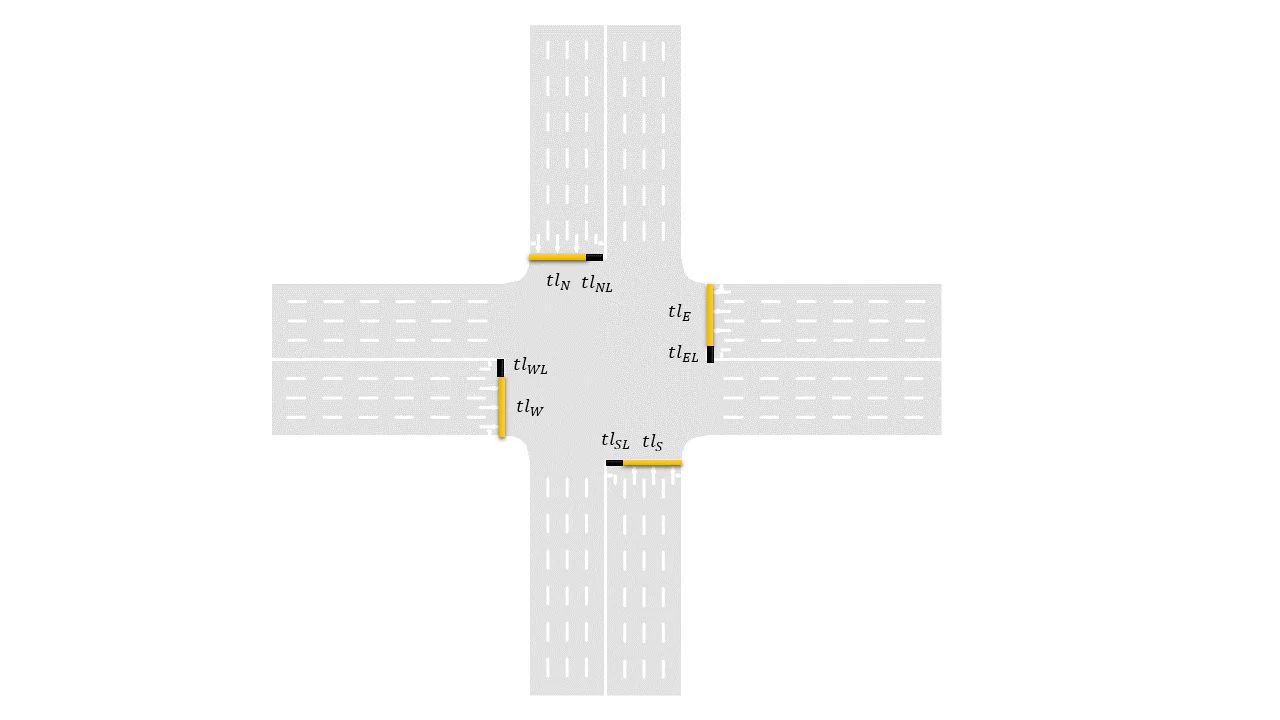
The traffic environment was modeled in SUMO. At every decision step, the agent received a representation of current traffic conditions, selected a signal action and observed a reward related to traffic performance.
textTraffic state → Deep Q-Learning agent → Signal phase ↑ ↓ └──────── reward / delay ───────┘
Connecting computer vision
A practical adaptive controller needs a reliable estimate of traffic density. The project therefore investigated real-time video processing and YOLO-based vehicle detection as the perception layer.
This creates an end-to-end architecture:
- Camera observes the intersection
- Detector estimates vehicles and traffic density
- State is sent to the RL agent
- Agent chooses the next traffic-light action
- The environment produces a new state and reward
Why reinforcement learning fits traffic control
Traffic is stochastic and highly dynamic. The optimal decision depends not only on the current queue but on how current actions influence future congestion. Reinforcement learning is naturally suited to this sequential decision problem.
Transferable insight
The most important lesson from the thesis was learning how to combine mathematical modeling, simulation, perception and sequential optimization in one engineering system. That same pattern appears in robotics, resource allocation and many real-time AI applications.