Iranian Vehicle Images Dataset for Object Detection Algorithm
A domain-specific dataset of 3,000 Iranian vehicle images and 5,765 manually labeled bounding boxes improved YOLOv8s performance over a COCO-trained baseline.
Research visuals & results
1 figure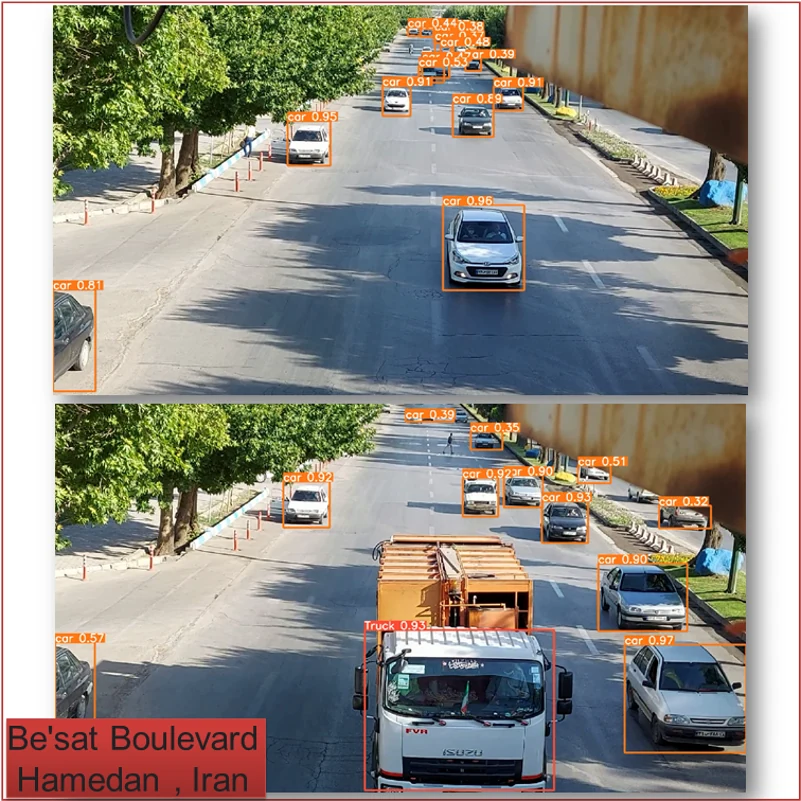
Reliable object detection depends heavily on the quality and relevance of training data. In this work, we built a dedicated dataset for Iranian urban traffic instead of relying only on generic international benchmarks.
Why a local vehicle dataset matters
Vehicles seen in Iran have a different distribution of brands, models, viewpoints and urban conditions. A detector trained on a broad dataset can perform well globally while still underperforming in a specific local environment. We therefore collected images from Iranian vehicle marketplaces and traffic scenes, then manually labeled the vehicles.
Dataset at a glance
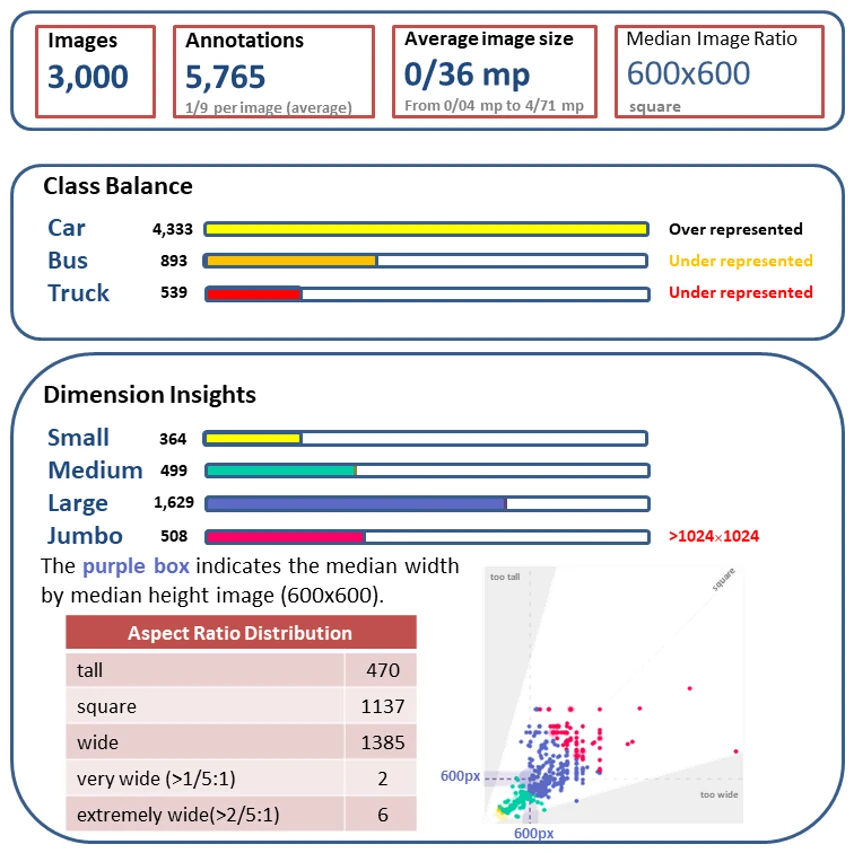
- 3,000 images
- 5,765 bounding boxes
- Three classes: car, bus and truck
- Images collected from sources including Divar, Bama and urban traffic scenes
- Multiple viewpoints and vehicle orientations
- Train, validation and independent test partitions
YOLOv8s results
The YOLOv8s model trained on the custom dataset achieved 91.7% precision and 92.6% mAP@0.5. Compared with the same architecture using COCO-trained weights as the main reference, the domain-specific training produced a substantial improvement in detection quality.
| Metric | Custom dataset |
|---|---|
| Precision | 91.7% |
| Recall | 86.6% |
| mAP@0.5 | 92.6% |
| mAP@0.5:0.95 | 70.2% |
Engineering lesson
The key lesson is simple: better data can be more valuable than a more complicated model. Careful collection, accurate annotation, class analysis and augmentation can make an existing architecture far more useful in a target environment.
Practical pipeline
python# simplified training concept from ultralytics import YOLO model = YOLO("yolov8s.pt") model.train( data="iranian-vehicles.yaml", imgsz=800, epochs=100, lr0=0.01, )
The dataset is useful for intelligent transportation systems, traffic monitoring and future research on localized vehicle perception.