IEEE conference paperDeep Learning2024-01-259 min read

Object Detection for Vehicles with Yolo

A seven-class, 29,759-image vehicle benchmark that treats ambulances and fire trucks as dedicated object-detection classes and evaluates real-time detector performance.
Authors: Pouria Maleki · Abbas Ramazani · Hassan Khotanlou · Sina Ojaghi · Milad Mousavi · Alexey Kalinin · Amir Mosavi
Pouria MalekiIEEE SAMI 2024DOI: 10.1109/SAMI60510.2024.10432884Blog updated: 2026-08-14
Object Detection for Vehicles with Yolo — research article by Pouria Maleki
Key results & takeaways
29,759 images and 55,925 annotations across seven vehicle classes
Ambulance and fire-truck classes are modeled explicitly instead of being absorbed into generic vehicle labels
Best reported detector reached about 85% precision and 85% mAP@0.5

Research visuals & results

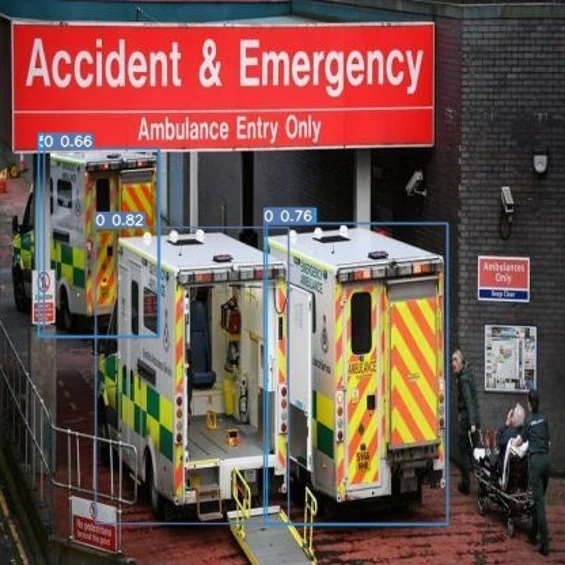
3 figures
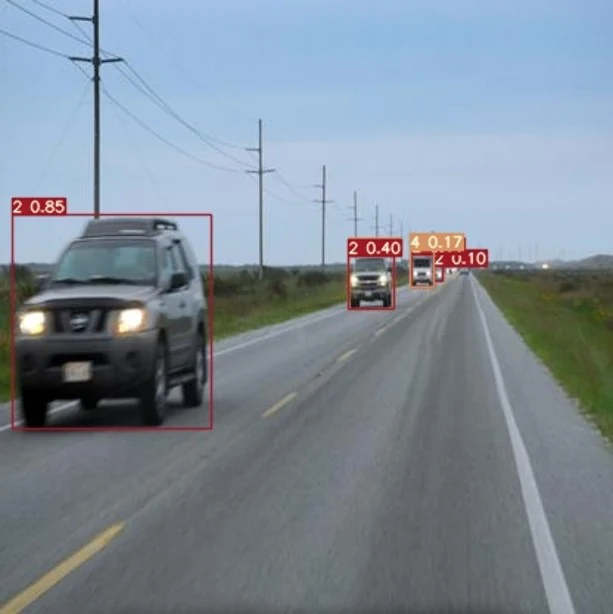
Vehicle detections in a road scene.
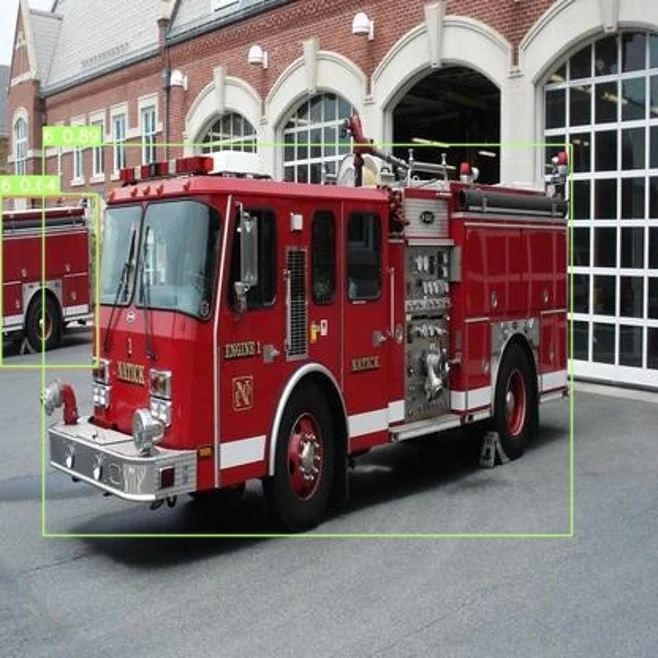
Fire-truck detection as a dedicated emergency-vehicle class.
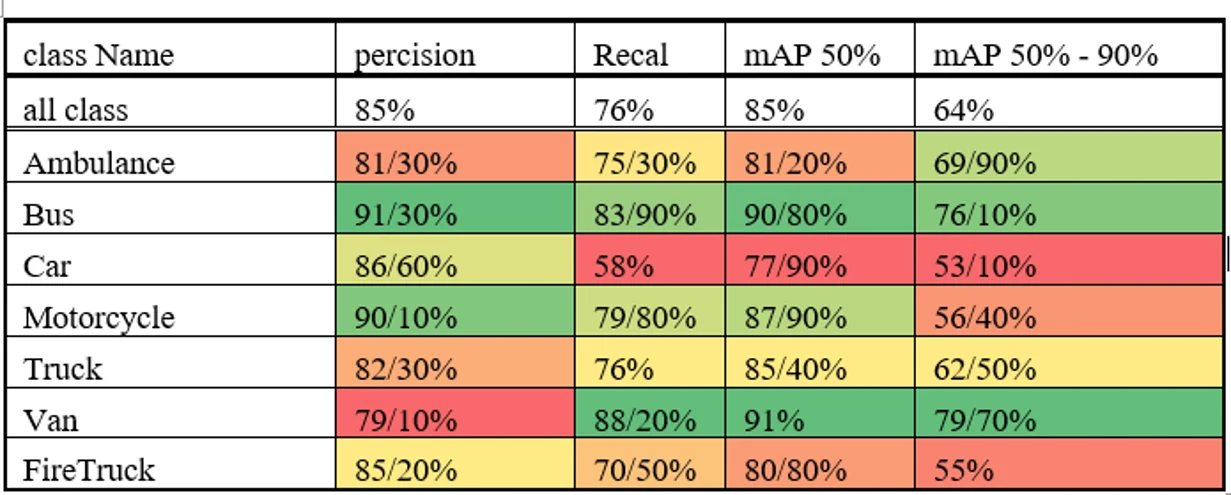
Per-class precision, recall and mAP results reported in the study.

Urban traffic management needs more than generic vehicle counting. Emergency vehicles such as ambulances and fire trucks should be recognized separately so that intelligent traffic-control systems can prioritize them when necessary.

Dataset design

The study presents a vehicle dataset with 29,759 images and seven classes:

  1. Ambulance
  2. Bus
  3. Car
  4. Motorcycle
  5. Truck
  6. Van
  7. Fire truck

The dataset contains 55,925 annotations and is split into training, validation and testing subsets. Data augmentation—including HSV transformations, translation, scaling, flipping and mosaic augmentation—was used to improve robustness and address class imbalance.

Comparing YOLO versions

YOLOv5s, YOLOv6-s and YOLOv7 were trained and evaluated. Among them, YOLOv7 produced the strongest overall result with approximately 85% precision, 76% recall and 85% mAP@0.5.

Why emergency-vehicle classes matter

Generic datasets frequently map ambulances to vans and fire trucks to trucks. That is acceptable for general-purpose detection, but not for a smart intersection that needs to grant priority to emergency traffic.

A dedicated class structure allows the perception layer to feed more meaningful information into a control layer—such as a reinforcement-learning traffic agent.

From perception to control

text
Camera → Vehicle detector → Traffic-state estimator
       → Priority logic / RL agent → Signal timing action

This separation between perception and decision-making creates a practical foundation for intelligent transportation systems.
Related research

Iranian Vehicle Images Dataset for Object Detection Algorithm — research by Pouria Maleki
Peer-reviewed publicationComputer Vision
20248 min readGitHub

Iranian Vehicle Images Dataset for Object Detection Algorithm

Journal of Artificial Intelligence and Data Mining (JAIDM)

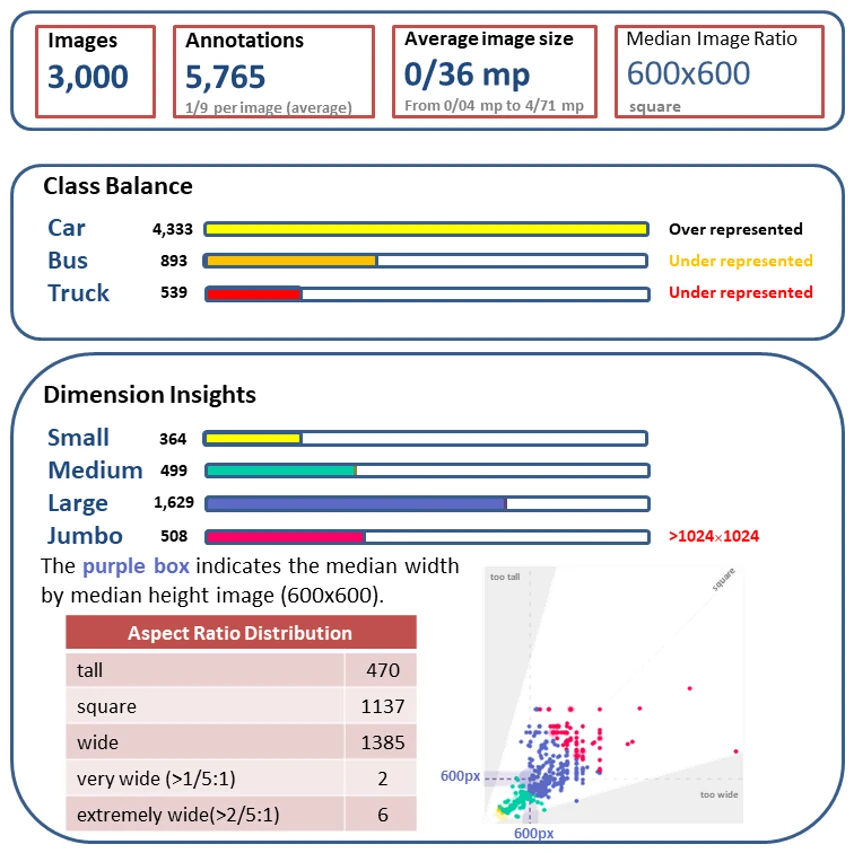
A domain-specific dataset of 3,000 Iranian vehicle images and 5,765 manually labeled bounding boxes improved YOLOv8s performance over a COCO-trained baseline.

3,000 Iranian vehicle images with 5,765 manually labeled bounding boxes
Read article
Flood Risk Analysis with Deep Learning — research by Pouria Maleki
IEEE conference paperPredictive AI
Sep 19, 20247 min read

Flood Risk Analysis with Deep Learning

IEEE SISY 2024

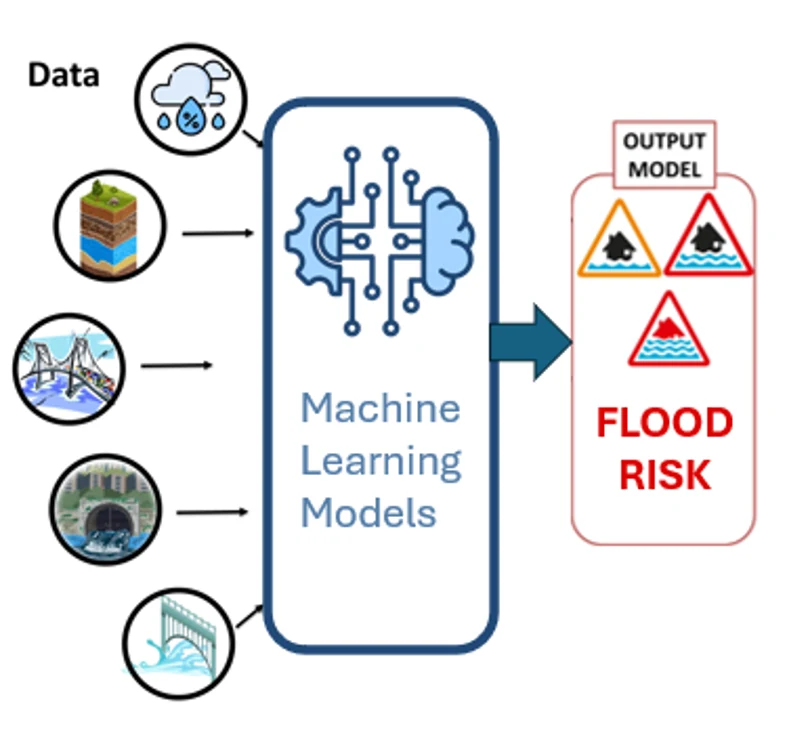
A comparison of three machine-learning approaches for predicting exposure, criticality and flood-risk scores using 2,634 bridge records.

2,634 bridge records were modeled through exposure, criticality and overall risk scores
Read article