Sustainable Energy Management in Multi-Unite Cooling Systems With Fuzzy Logic and Adaptive Nonlinear Control
A centralized controller coordinates 100 air-conditioning units using wind power, grid energy, fuzzy decision-making and adaptive nonlinear control.
Research visuals & results
2 figures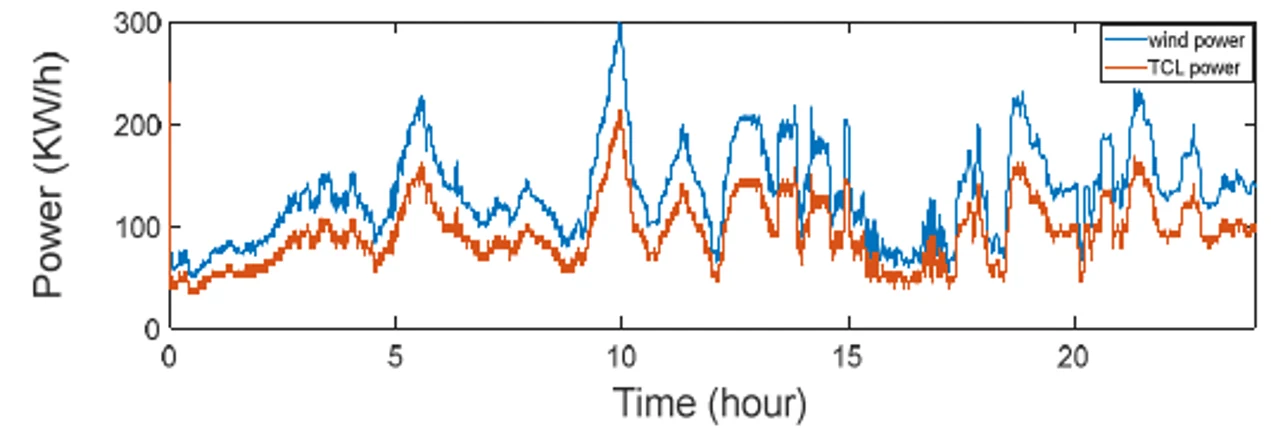
Large groups of air-conditioning units can create significant peak demand. This work combines fuzzy logic, adaptive nonlinear control and renewable wind energy to manage a cluster of thermostatically controlled loads.
System idea
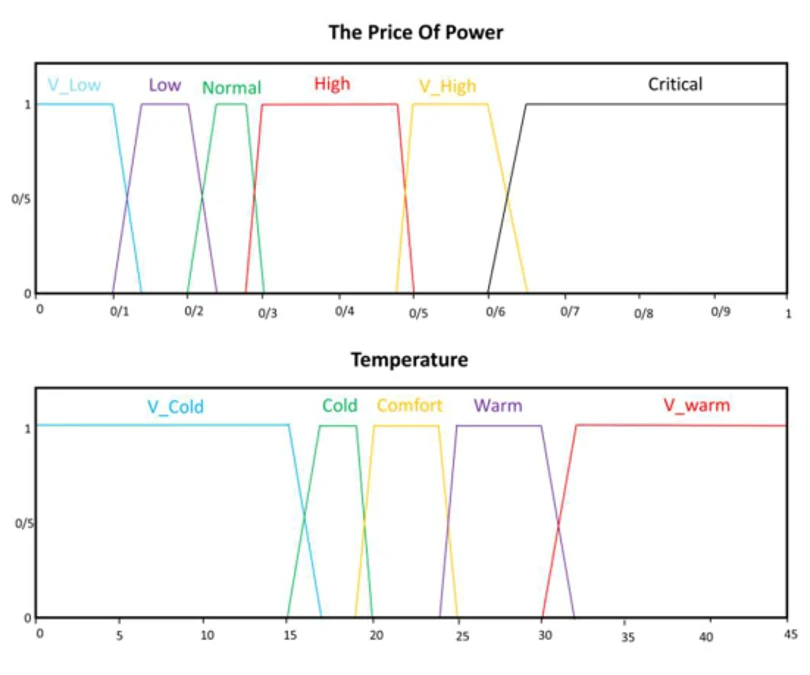
The energy supply combines power from the electrical grid with renewable generation. A fuzzy controller decides how much grid power should be used based on variables such as electricity price and ambient temperature.
An adaptive nonlinear controller then coordinates the ON/OFF behavior of individual cooling loads so aggregate demand tracks the desired power reference.
Why the adaptive layer matters
A fixed nonlinear-control gain can be difficult to tune: a large value may introduce chattering, while a small value can reduce tracking performance. The adaptive law changes the effective control gain online, reducing the need for manual tuning.
Simulation scenarios
The MATLAB simulation considered 100 air-conditioning units and three electricity-pricing strategies:
- Fixed-time pricing
- Usage-time pricing
- Real-time pricing
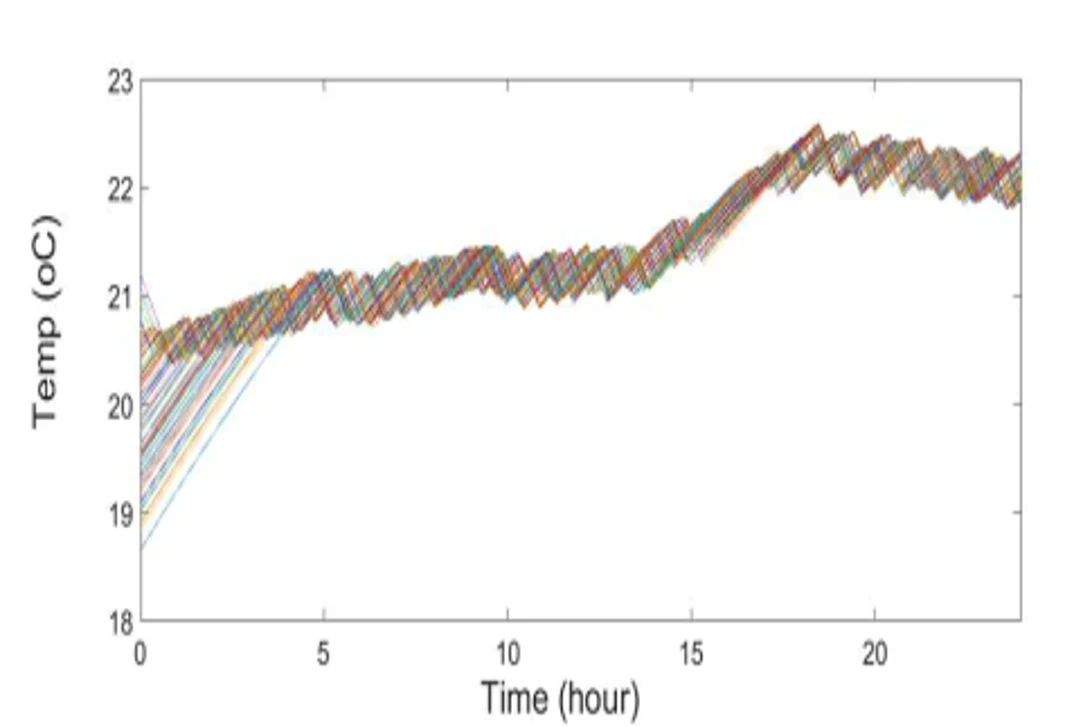
The paper reports power-saving figures of 1821.6, 2401.9 and 2131.5 for the three pricing scenarios (using the study's reported metric), while maintaining a comfortable temperature envelope.
Broader relevance
The architecture illustrates how intelligent control can connect user comfort, variable energy prices and renewable generation. Similar ideas can be extended to smart buildings, demand response and distributed energy systems.